Puran Bhagat: qisse de vakhre roop
Eh lekh Pakistan te India de Punjab de lokan, ohna diyan yaadan te sanjhe virse nu samajhan layi ae. Asal havale naal parho. Jithe koi gall hale tasdeek nahi hoi, ohnu pakka natija nahi keha gaya. Apne ilaqe da tajurba, thaan te havala vi sanjha karo.
Poora khoj lekh — English
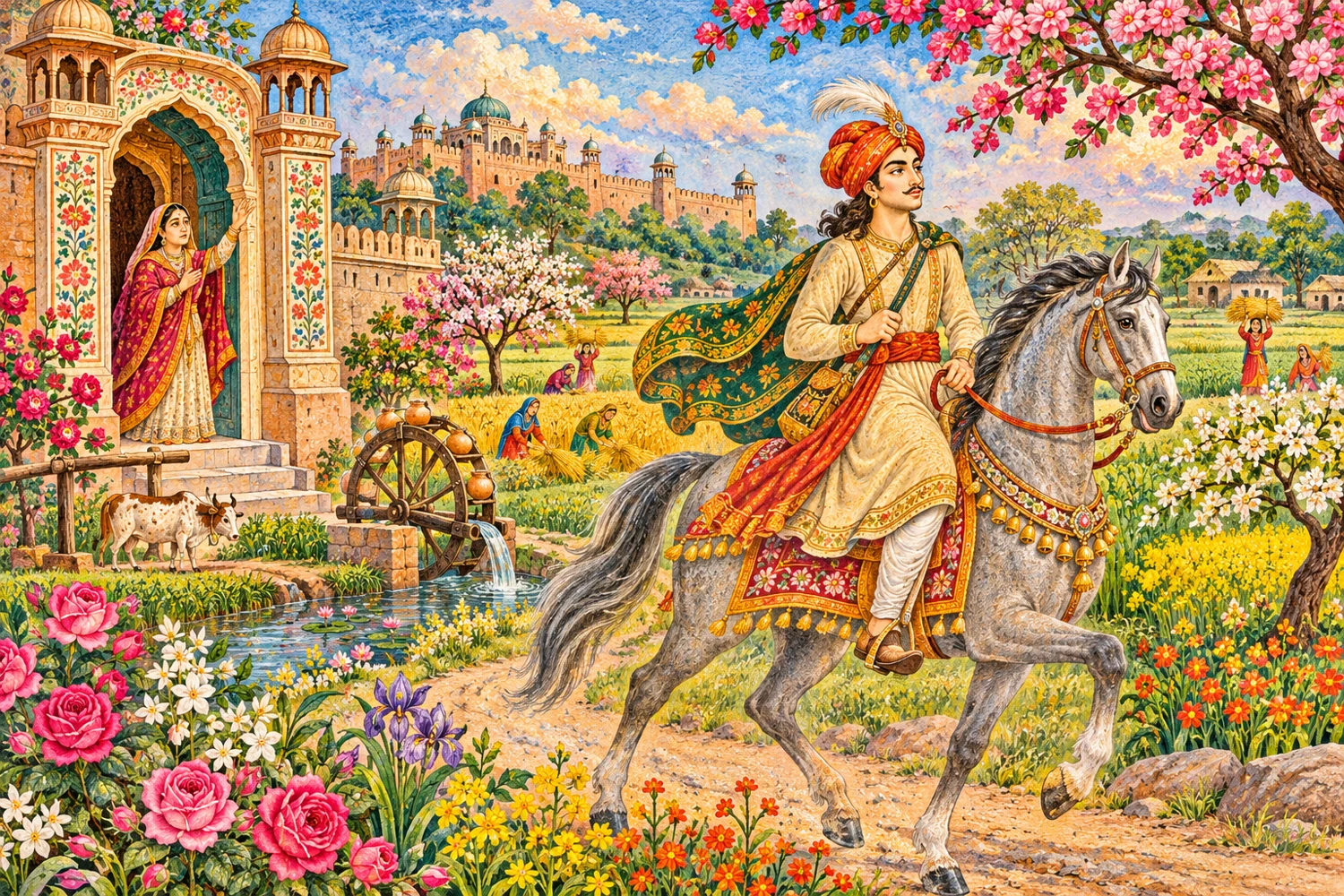
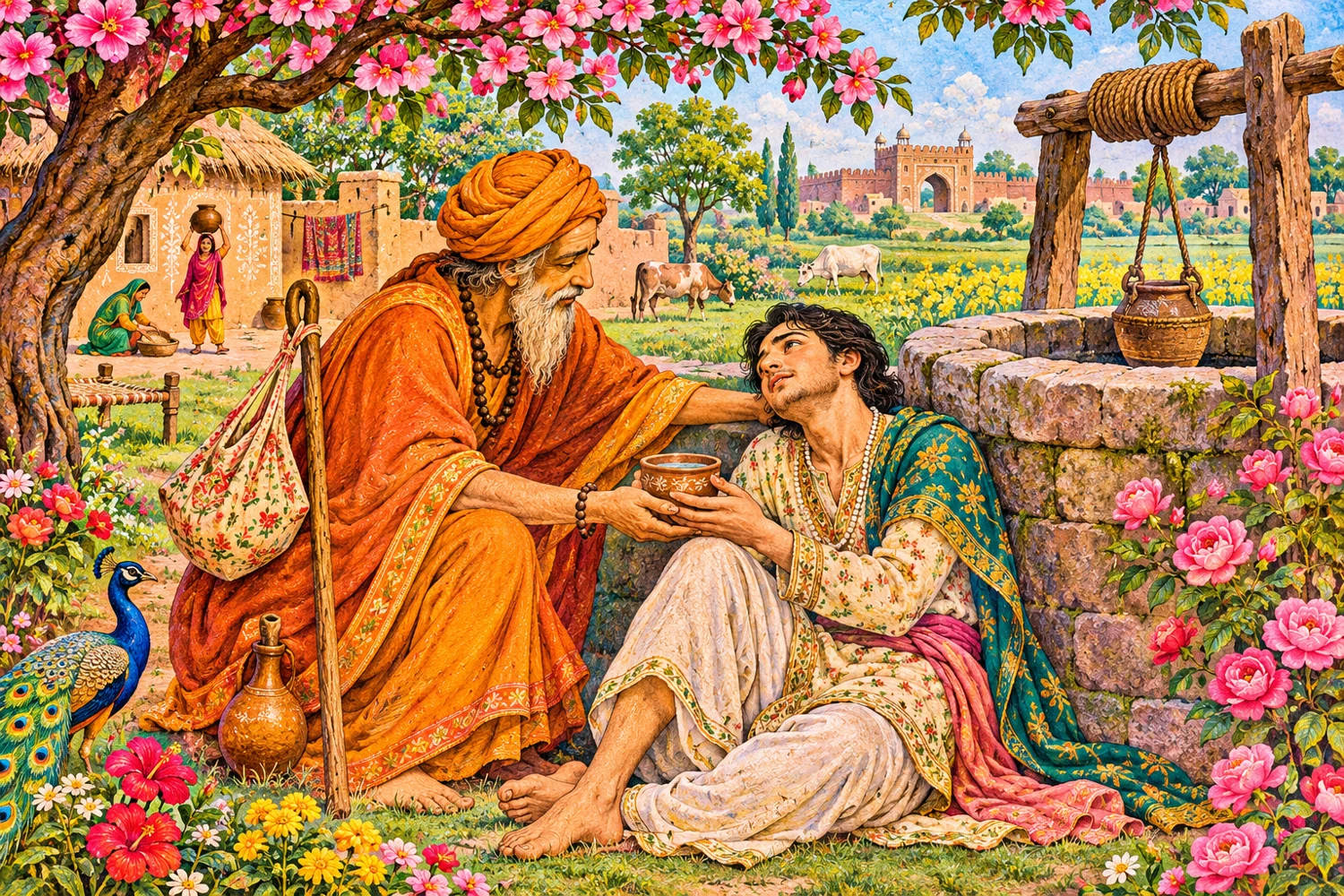
Puran Bhagat is remembered in the legendary Sialkot world of Raja Salbahan. In a familiar version, an accusation within the royal household leads to the prince’s terrible punishment and abandonment. A spiritual figure rescues him, and his later return transforms the meaning of the family’s loss.
The legend links bodily suffering, injustice, renunciation and forgiveness. It is not a verified court case, and its miraculous rescue belongs to storytelling and devotional belief. Listeners and writers have also questioned the treatment of the women in older versions, making interpretation part of the tale’s continuing life.
A story-cycle can travel through songs, performances and literary rewritings without staying identical. Sialkot’s modern location in Pakistan and Punjabi readership in India both matter; neither makes the legend the exclusive possession of one state.
The recorded collection’s notes connect Puran with the Rasalu cycle. The Journal of Punjab Studies discussion situates these stories within Punjabi oral expression. Read the attribution with the telling, and record who told your family’s version, where, and approximately when.