 Imaratkala te virsa
Vaisakhi at Panja Sahib
Footage from the 2025 Vaisakhi gathering at the gurdwara in Hasan Abdal.
Full research text is currently in English. Punjabi titles and reading versions are being expanded.
The handprint and the company on the road
Hasan Abdal stands on a route travelled for centuries. Sikh tradition associates the town with Guru Nanak and Bhai Mardana, and the story of a boulder held back by the Guru’s hand. Panja means hand or palm. The imprint preserved at the gurdwara gives people a physical place in which to recall the story.
In the telling, access to water and the character of hospitality matter as much as the stone. Read the episode as a devotional narrative alongside a documented account of the gurdwara complex. It explains why a feature of the landscape carries meaning across generations.
A shrine in use
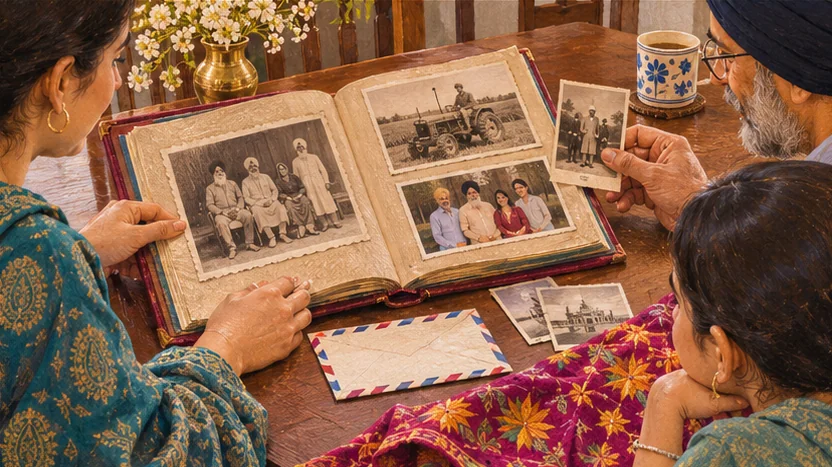
The shrine continues to draw pilgrims, including groups visiting for Vaisakhi. Kirtan, congregational reading and langar give people time to be together once they arrive. For people who have heard of the site from family in India or abroad, joining a congregation in Hasan Abdal can make an inherited place name feel different.
Sikh memory also recalls a 1922 railway incident at Hasan Abdal, when Sikhs sought to serve food to people being transported by train. That story belongs to the twentieth-century history of service and reform. It sits beside the much earlier tradition attached to Guru Nanak without sharing the same historical evidence.