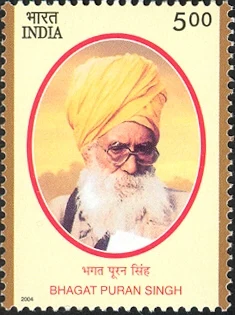
Bhagat Puran Singh da janam 1904 vich Rajewal, Ludhiana de ilaake vich hoya. Ohdi seva Lahore ton Amritsar tak judi hoi hai. Beemar, apaahaj te besahara lokan di sambhaal ohna layi ik din da nek kam nahi, roz di zimmedari si. Piara Singh di lambi sambhaal ohdi zindagi da yaad kita jaan wala hissa hai. Pingalwara de kam vich rehan di thaan, ilaaj, taleem te mur sambhalan di madad shamil hai. Oh lokan de naal kudrat te dharti di fikar vi karde san. Eh kahani puchhdi hai ke sade pind vich ikalle bande, sambhaal karan wale te madad mangan wale nu ki milda hai. Seva da matlab kise di tasveer dikhauna hi nahi, ohdi izzat te marzi da khayal rakhna vi hai.
Poora khoj lekh — English
Learning to notice
Bhagat Puran Singh was born in 1904 in Rajewal, in the Ludhiana region of Punjab. The organisation he founded, Pingalwara, describes a life shaped by service to sick, disabled and abandoned people. His work took him through Lahore and, after Partition, to Amritsar. These places belong to the same life even though a border now separates them.
One of the best-known relationships in the Pingalwara account is his care for Piara Singh, a disabled person whom he supported over many years. The importance of that relationship is not that it makes a dramatic photograph. It shows sustained responsibility. Care involves food, shelter, washing, treatment, companionship and returning the next day. An act becomes a way of life when the person receiving help remains visible after the first moment of sympathy.
An institution around human dignity
Pingalwara grew into an organisation providing a home and services for people in need. Its own account brings together medical care, rehabilitation, education and support for residents who might otherwise be left without protection. Puran Singh’s public work also included writing and sharing information about the environment and the use of natural resources.
His example connects several parts of Punjabi culture that are sometimes presented separately. Concern for people, animals, trees and the conditions of everyday living can belong to the same moral imagination. Looking after the land while ignoring a person outside the gate is an incomplete idea of community. Equally, respect for human life should make us attentive to the environment that sustains it.
Remembering without reducing
Puran Singh died in 1992. Pingalwara’s continuing work is part of his legacy, but a cultural profile should also help readers understand the daily habits behind a large institution. Someone noticed a need, accepted work that others avoided and persuaded other people to participate. This is a form of leadership that may be quiet, physically difficult and far removed from a stage.
The lesson for readers is not that every person can or should reproduce his entire life. It is that responsibility can begin with something specific: making a public space more accessible, helping someone reach a service, supporting a carer, or asking whether an isolated neighbour has company. The person receiving assistance deserves agency and privacy, rather than being treated as a symbol of the helper’s goodness.
This website’s recognition of Puran Singh is a historical profile, not an endorsement of a fundraiser or a claim of partnership with Pingalwara. His life belongs in Punjab’s shared reading room because it makes compassion tangible. The question it leaves with us is simple: when we say our village or our city cares, who can actually feel that care?