- type
- Rural animal-sport context
- players
- Varies by contest; paired animals in the cited examples
- equipment
- Contest-specific yoke, plank or cart
- setting
- Approved rural sporting ground
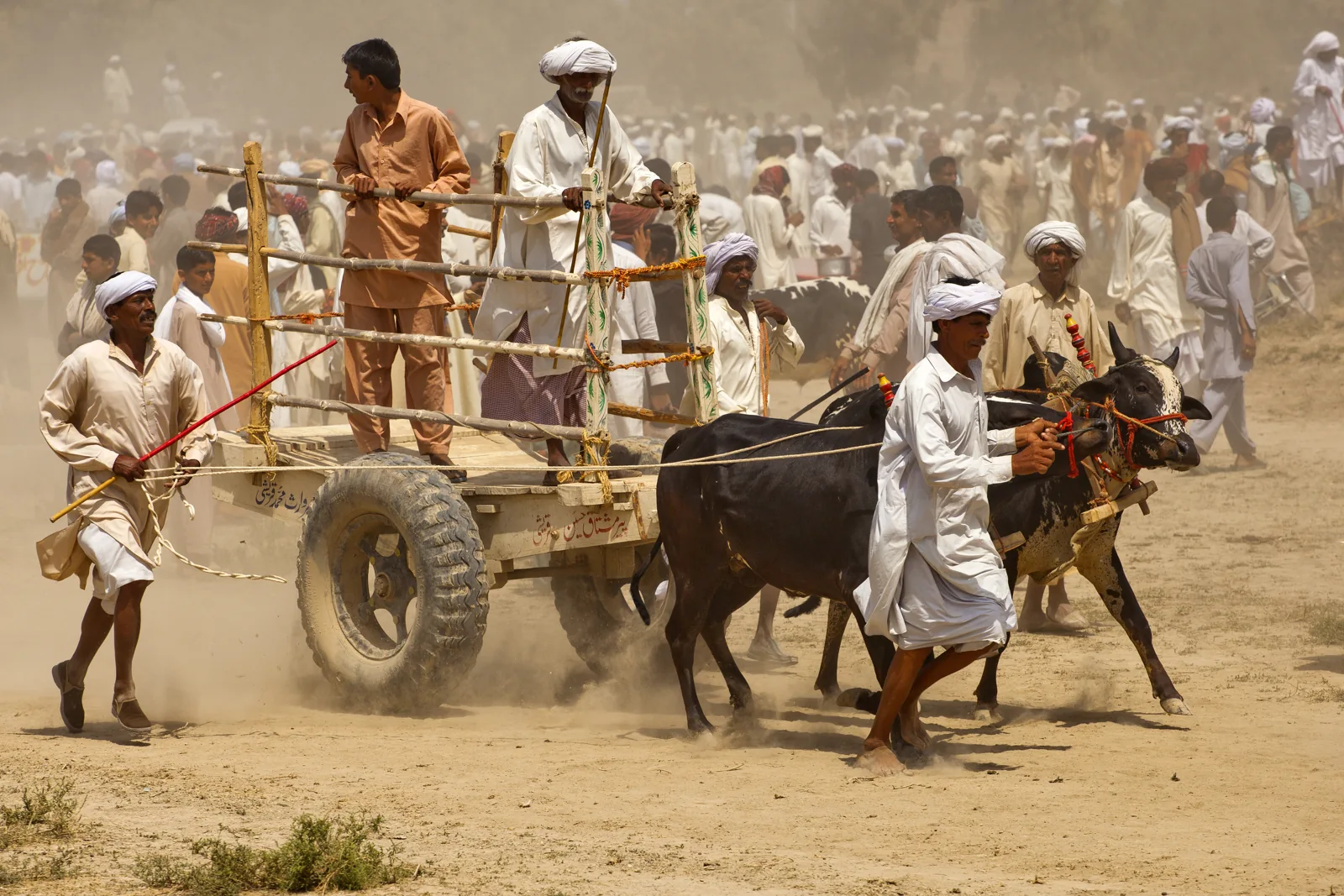
Bailan di daur, karah khichna ate bail-gaddi da mukaabla tasveer vich ral sakde ne, par unhan nu vakh samajhna zaroori ae. Attock di 2025 di report bailan de jorhe, lakri de dhaanche ate takhte utte kharre sawaar di daur dasdi ae. Karah vich bail vaahi hoi mitti raahin takhta khichde ne. Jitt samaa, khich jaan hor maqami shart naal tai ho sakdi ae. Kila Raipur naal jurria qanooni record har thaan di ijazat nahi ban janda. Aun wale event di tasdeeq organizer kolon karo. Janwaran de paani, aaram, ilaaj ate darshakan di hadd nu vi coverage da hissa banao.
Pind te ilaqe mutabiq naa ate asool badal sakde ne. Apni riwayat sanjhi karde hoye thaan, samaa ate sikhaun wale bande da naa daso. Tafseeli lekh de hawale vi parho; ajj di tabdeeli nu purani riwayat ton vakh pachhano.
Poora khoj lekh — English
“Bull sport” is a broad label. Radio Pakistan’s May 2025 report from Attock describes a pair of bulls attached to a wooden frame, with a rider standing on a plank as they race along a dirt track. This is a documented Pakistani setting, not a description that can be pasted onto every rural animal competition.
Karah uses paired bulls to pull a wooden plank through cultivated earth.
That brief distinction is important. A timed race, a judged pulling performance and a bullock-cart competition need different explanations. The local name, the equipment and the way a winner is decided tell a visitor more than an undated picture of powerful animals. Ask an organiser what the contest is called locally and which published or customary rules are being used.
In Indian Punjab, the legal record linked here contains a specific exception associated with the Kila Raipur Rural Sports Event, subject to rules. It does not provide general permission for bullock racing everywhere. Nor can a law governing an Indian event establish the legal position at a Pakistani fair. Historical coverage and permission for a forthcoming event are separate questions.
A responsible visit begins with confirmed organiser information and a clear spectator boundary. Look for handling, water, rest and veterinary arrangements, and avoid entering the animals’ path for a photograph. A strong story can include both the pride of owners and serious welfare questions without assuming that either viewpoint explains every event. Current tournament notices should be checked directly; this guide supplies cultural context rather than an invitation to organise an unverified race.