- type
- Aiming and target game
- players
- Two or more; local formats differ
- equipment
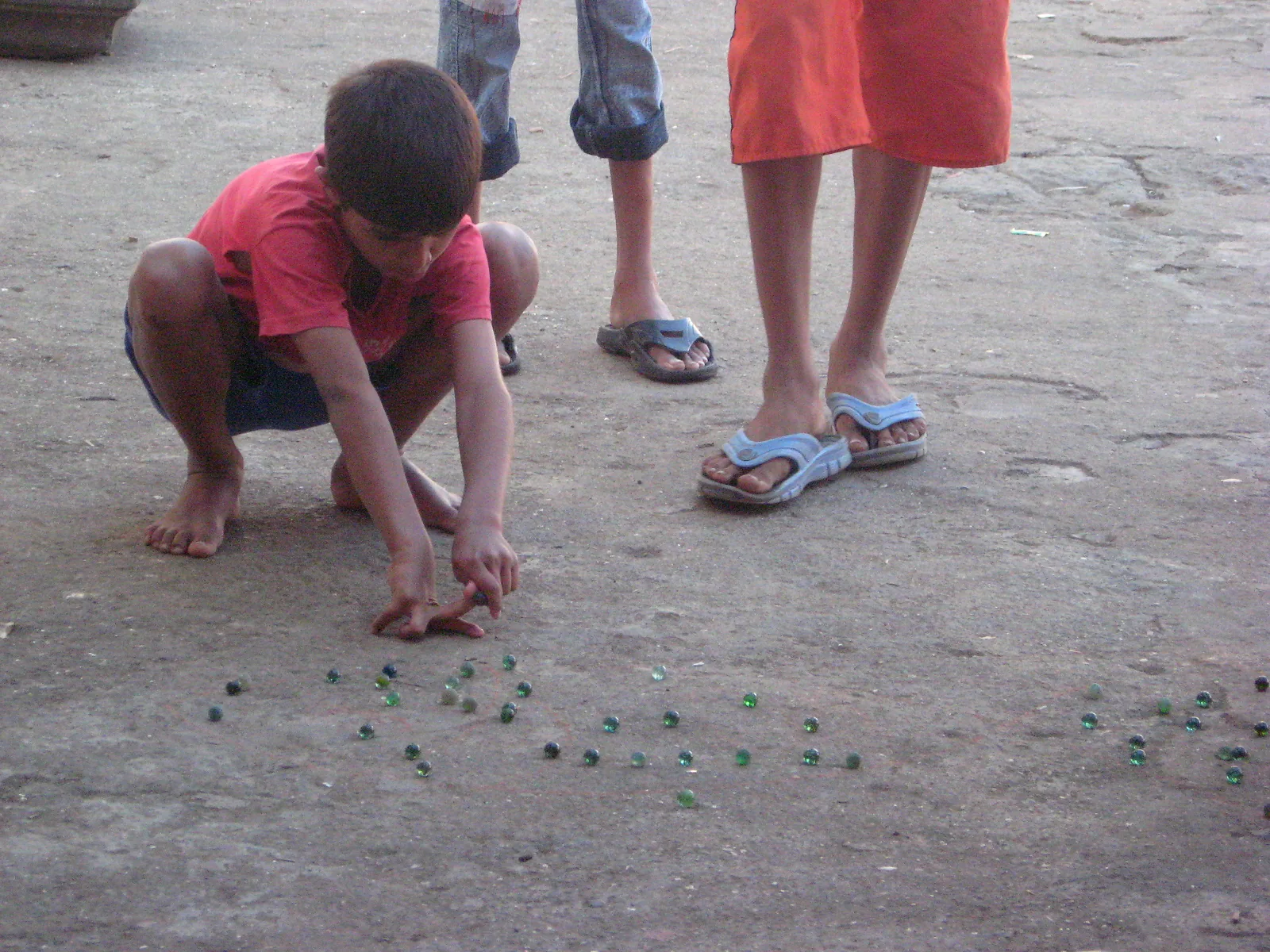
- Marbles and a marked area or small target hole
- setting
- Level patch of ground
Kanchay, bantay ate goli de naa kai maqami khedan wal lai jande ne. Kise vich ghere ton golian bahar kaddian jandian ne; kise vich khutti nishana hundi ae. Maar da kon, zor ate ungli di pakar bahut farak pa sakde ne. Vaari ton pehlan shooter, lakeer, nishana ate akheer te golian kis kol rahangian, eh tai kar lao. Ghar jaan school di khed vich har bache nu apnian golian wapas dena ikk changa sanjha samjhauta ho sakda ae. Chhotian golian nu moonh vich paun wale bachian ton door rakho. Apne muhhalle de shot, pukar ate sab ton pyare bante di kahani daso.
Pind te ilaqe mutabiq naa ate asool badal sakde ne. Apni riwayat sanjhi karde hoye thaan, samaa ate sikhaun wale bande da naa daso. Tafseeli lekh de hawale vi parho; ajj di tabdeeli nu purani riwayat ton vakh pachhano.
Poora khoj lekh — English
Kanchay, bantay, goli: familiar names can lead to different versions of a marble game. The Traditional Sports & Games Pakistan Association describes circle or square games, hole-based games and contests in which a player aims at another marble. What links them is judgement of direction and force using a small, carefully controlled shot.
In one recorded format, players try to knock target marbles out of a marked area. In another, a small hole becomes the objective before players aim at opponents’ marbles. Local groups decide the boundaries, order of turns and what makes a successful shot. The material and size of the marbles can also change the feel of the game.
Before playing with a mixed group, make the agreement visible: which marble is the shooter, where a shot begins, whether a line counts as in or out and what happens to marbles at the finish. For a family or school session, returning every marble to its owner avoids turning a shared game into an argument over possessions. That is a suggested house rule, not a claim about every childhood version.
Kanchay appeared among the games in WCLA’s traditional-games event in Lahore in October 2025. Its appeal at a heritage day is not only the colour of the glass. A player can demonstrate a grip, an older relative can correct a remembered rule, and a younger visitor can discover why a small shift in angle matters.
Use an area away from traffic and keep small marbles away from children who may put them in their mouths. A story about kanchay can preserve the playing words too: the name of a shot, the call before a turn or the prized marble nobody wanted to lose.