- type
- Team pulling sport
- players
- Two opposing teams; match the local or competition format
- equipment
- Suitable rope and clearly marked lines
- setting
- Level, unobstructed ground
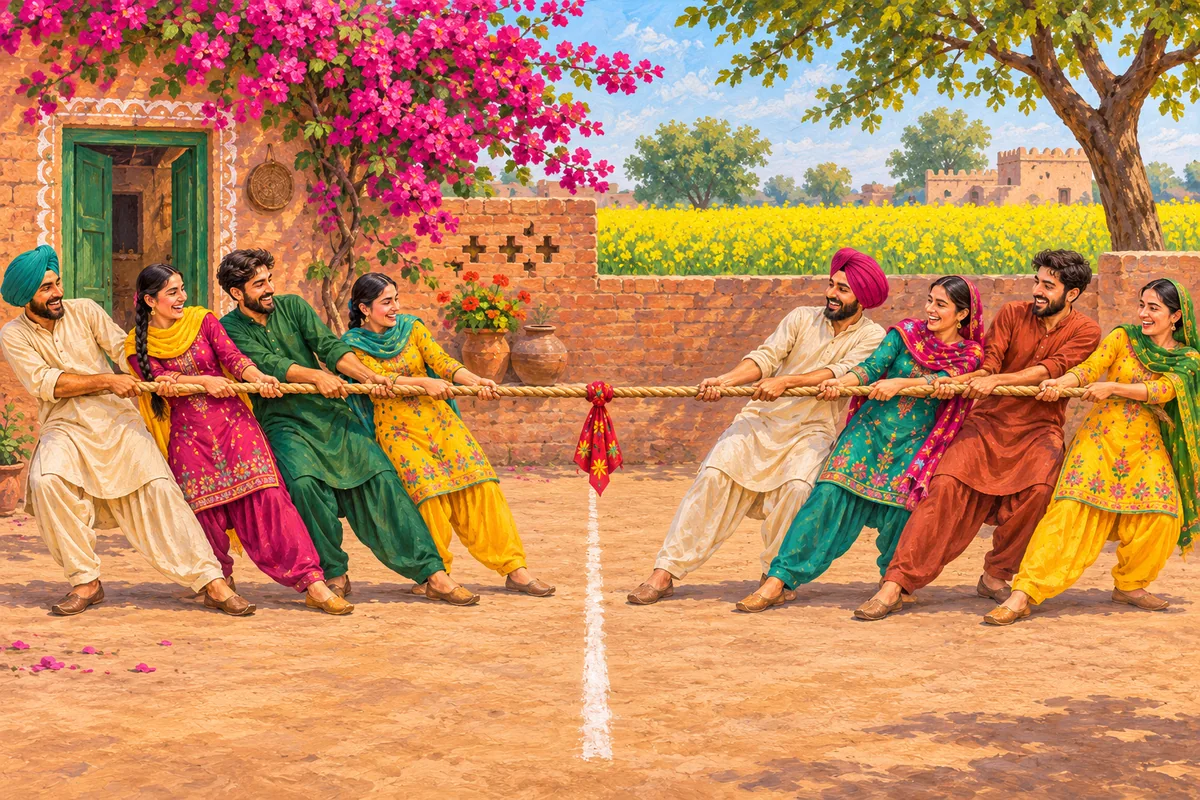
Rassa kashi vich do teaman rassa ulat paase khichdian ne, taan jo muqarrar nishan lakeer ton paar aa jaave. Mela, school jaan college da friendly mukaabla ate federation di championship vakh sandarbh ne. Rasmi mukaable layi organizer di rulebook parho. Sanjhi khed ton pehlan barabar teaman, shuruaati ishara, jitt di lakeer ate rokan da ishara tai karo. Rassa hathan jaan sareer de gird na lapeto te na kise nu rasse naal bannho. Sabh ikatthe rukko, ikk khidari achanak chhadd ke dujian nu na sutt deve. Darshak saathian di ikko taal ate pairan di sanjhi harkat nu vekhan.
Pind te ilaqe mutabiq naa ate asool badal sakde ne. Apni riwayat sanjhi karde hoye thaan, samaa ate sikhaun wale bande da naa daso. Tafseeli lekh de hawale vi parho; ajj di tabdeeli nu purani riwayat ton vakh pachhano.
Poora khoj lekh — English
Rassa kashi is tug of war: two sides pull a rope in opposite directions, trying to draw the other team or a marked point beyond an agreed line. The task is easy to recognise, which helps explain its place in school days, fairs and community gatherings. Sports Board Punjab lists tug of war among traditional sports, and it appeared in WCLA’s Lahore games programme.
A casual pull and a federation competition should not be confused. The Tug of War International Federation publishes a current rules manual covering the formal sport, including competition structures, judging and pulling technique. It is the right starting point for a club that wants regulated competition, rather than simply adding a rope to a festival programme.
For a community session, agree equal team numbers, the start signal, the winning line and a clear stop signal before taking the strain. Choose a suitable undamaged rope and an open area with secure footing. These are organising suggestions for a friendly game; the event’s own rules remain the reference for a formal match.
The Pakistani traditional-sport guide specifically warns against loops, knots and wrapping the rope around the hands or body. A safe grip matters more than a dramatic photograph. Participants should not be encouraged to lock themselves onto the rope or to continue through pain. Stop together rather than suddenly abandoning a pull while others are still straining.
As a spectator, listen for the rhythm between teammates and watch whether they move as a group. The loudest person is not necessarily doing the most useful work. For a story from your college or village, tell us how teams were chosen, who called the timing and what happened when the two sides seemed evenly matched.