Phulkari da arth phullan da kam ae, par kapre vich sirf phull nahi. Rangla resham khaddar utte tankeya janda ae; pichhle paase ton darn stitch is riwayat di khas pehchaan ae. Ghanne tanke naal dhakkia bagh ate hor design apne naa rakhde ne. Eh hunar ajj de donan mulkan de Punjab ate kai mazhabi communityan di zindagi naal juria ae. Mawan, dadian, rishtedaran ate sahelian de hathan da kam vyaah, prem ate hijrat di yaad rakh sakda ae. Apne ghar di phulkari di poori ate nazdeeki tasveer lo; banaun wali da naa, thaan, lagbhag saal ate jo anjaan ae oh vi saaf likho.
Eh Punjabi saar tuhanu poore khoj-lekh wal lai janda ae. Tafseel ate hawale hethaan parho. Je tuhade ghar, pind jaan muhhalle di yaad is naal jurdi ae, taan apna tajurba thaan te same de naal sanjha karo; nijji yaad ate tasdeeq-shuda tareekh nu vakh pachhano.
Poora khoj lekh — English
Phulkari means flower work, but a close look reveals more than flowers. Philadelphia Museum of Art describes a tradition made across the Punjab of present-day Pakistan and India, using bright silk on cotton. Its exhibition interpretation places the work in women’s family and social lives across Muslim, Sikh, Hindu and Christian communities. The cloth cannot be assigned to a single modern national identity.
The materials carry a geography of their own. The museum’s Darshan Dwar example uses pat, an untwisted silk thread, on khaddar, a handspun and handwoven cotton ground. Cotton was prepared locally, while traders brought silk from more distant places. A textile that appears to speak only of one household also records connections between local labour and wider trade.
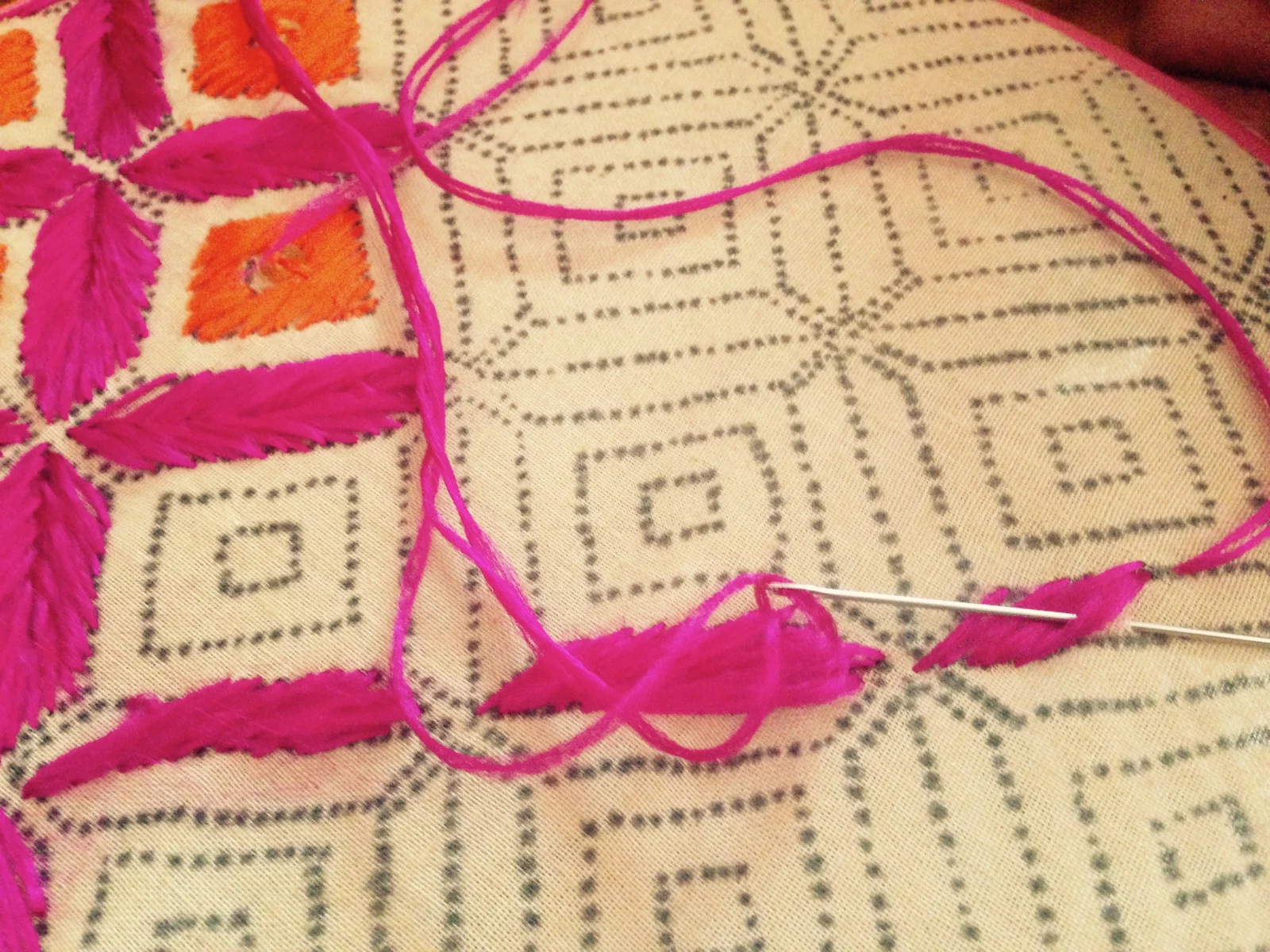
The V&A explains the characteristic use of darning stitch from the reverse of the cloth. Dense examples called bagh, or garden, can cover almost the entire surface. Other types have their own motifs and names. Philadelphia’s Darshan Dwar cloth includes human and animal figures; its museum record interprets one figure with a pith helmet and parasol as likely recalling the colonial presence. Such details invite careful looking rather than a single universal meaning.
Phulkaris were worn, displayed and used within homes. Mothers, grandmothers, other relatives and friends passed skills to younger women, and wedding preparation gave many pieces particular significance. A family textile may therefore preserve work, affection, aspiration and a difficult migration history at once. Its maker’s name is as valuable as its classification.
When sharing an inherited piece, photograph the whole cloth and a small area of stitching, then record what your family actually knows: maker, approximate date, place, occasion and the route by which it reached you. Leave uncertainties visible. Contemporary makers are also part of this story; credit their designs and distinguish hand embroidery from machine production. Revival means sustaining skilled people as well as admiring old objects.