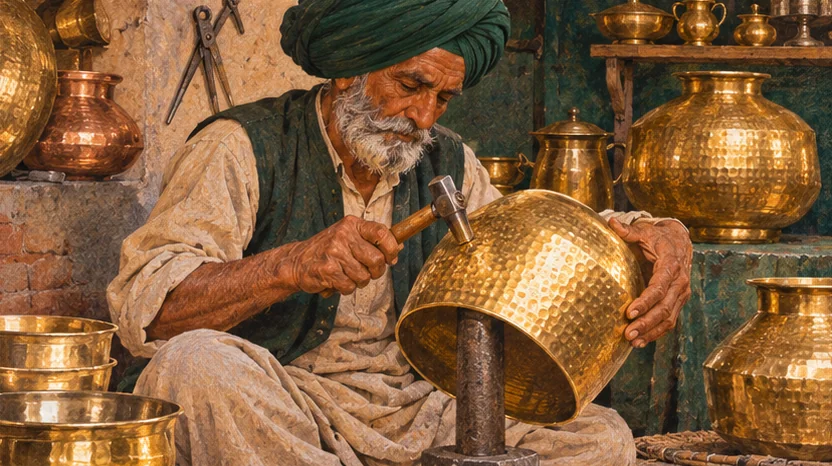
Jandiala Guru de Thatherian di pittal ate tambe de bartan banaun di riwayat UNESCO di 2014 di list vich shamil ae. Dhaat patli karan ton hathode naal roop dena, garmi sambhalna, saaf karna ate nakkashi tak kai hunar ikatthe ne. Eh sirf purane bartan di numaish nahi, kam karde karigar ate parivaaran raahin agge jandi sikhya ae. Rasoi da virsa banaun, murammat karan ate vartan wale sabhan naal jurda ae. Karigar di kahani vich auzaar, shagirdi ate badaldi mang puchho. Dhaatan de sehat faide bare riwayati vishvaas nu vishvaas keh ke likho; heritage listing har bartan nu har khaane layi munasib sabit nahi kardi.
Eh Punjabi saar tuhanu poore khoj-lekh wal lai janda ae. Tafseel ate hawale hethaan parho. Je tuhade ghar, pind jaan muhhalle di yaad is naal jurdi ae, taan apna tajurba thaan te same de naal sanjha karo; nijji yaad ate tasdeeq-shuda tareekh nu vakh pachhano.
Poora khoj lekh — English
UNESCO inscribed the Thatheras' brass and copper utensil-making tradition of Jandiala Guru in 2014. Its description follows the craft from flattened metal to hammered vessels, carefully controlled heating, finishing and decorative dents. The knowledge is passed through practising families.
This belongs beside Punjabi cooking histories: not simply as a display of old pots, but as a record of the people who make, repair and use them. An artisan profile could document tools, apprenticeship and changes in demand. Traditional beliefs about the benefits of metals should be labelled as beliefs; the heritage listing does not establish that every copper or brass vessel is suitable for every food.