Iqbal Qaiser Punjabi shayar, khoji te Punjabi Khoj Garh de bani ne. Punjab Research Group mutabik eh kendar 10 March 2001 nu shuru hoya. Kasur de Lalyani ilaqe vich is da kam Punjab di tareekh, boli, sahit te kala naal jurda ae.
Kitaaban, hath-likhtan, tasveeran te zubani yaadan ik duje nu samajhan vich madad kardiyan ne. Qaiser de 2017 interview vich library, khojian di madad te sanjhe samagaman da zikr ae. Ajj di collection di ginti jaan mukammal digitisation da daava nahi kita gaya.
Poora khoj lekh — English
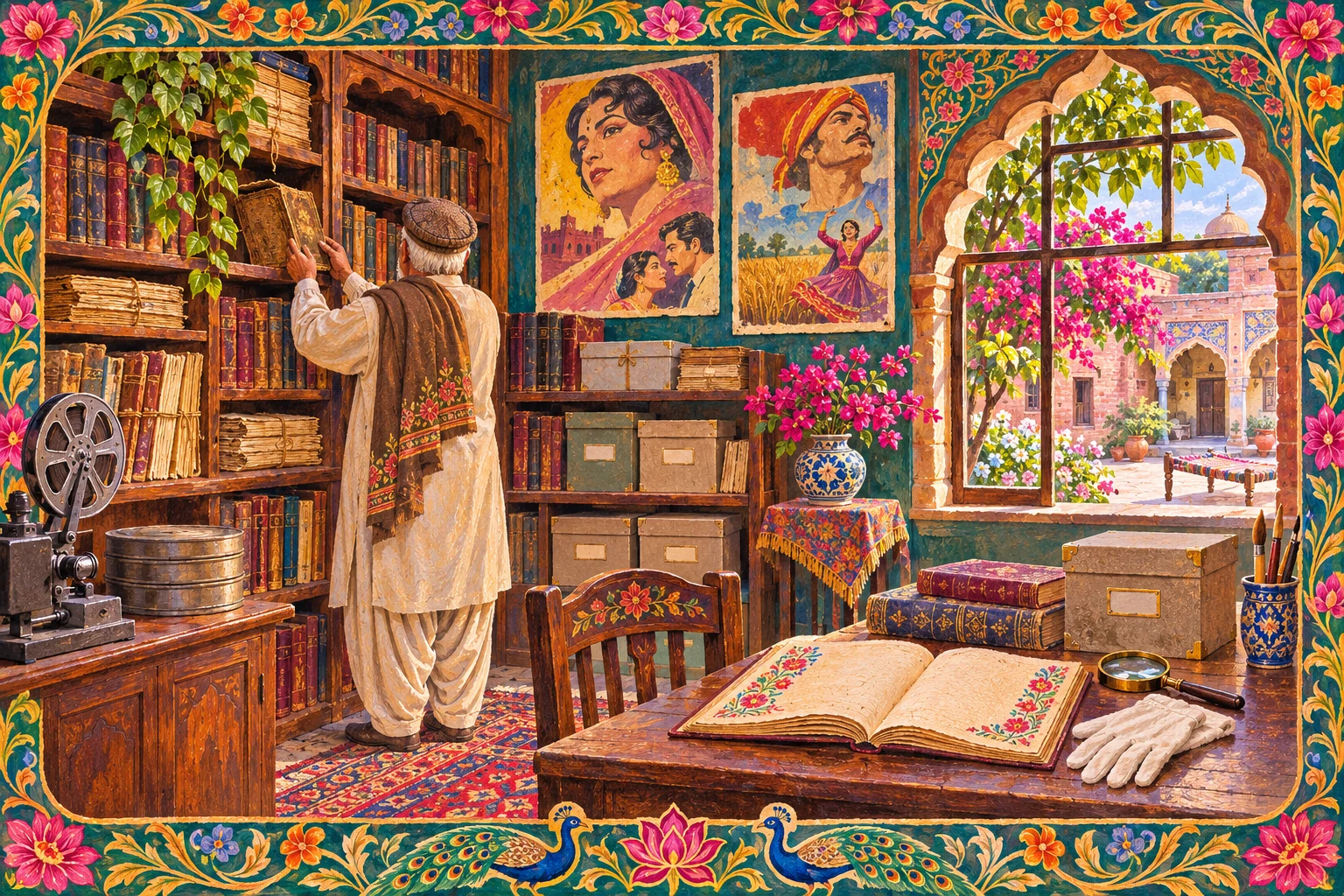
Iqbal Qaiser is a Punjabi poet, researcher and the founder of Punjabi Khoj Garh in the Kasur region of Pakistani Punjab. Punjab Research Group’s account dates its establishment to 10 March 2001 and describes a centre maintained through a trust and voluntary work. Its purpose reaches across history, literature, music and the arts. The archive gives Punjab’s scattered cultural materials a place where they can be read together.
The Khoj Garh website lists books, manuscripts, documents and photographs. Its stated aims include supporting scholarship, conserving cultural heritage across religious boundaries and recording oral history. A collection matters because an old printed page can answer a different question from a remembered story or a photograph. Keeping those forms together allows researchers to compare evidence rather than rely on a single version of the past.
In a 2017 interview with The News on Sunday, Qaiser described building the institution on agricultural land and making its library available to researchers. He also discussed conferences, Punjabi publications and his research on Sikh shrines in Pakistan. These are specific activities behind the broad word preservation: finding material, arranging it, helping a reader reach it and creating occasions for people to discuss it.
Khoj Garh is also an invitation to treat the village and the small town as places where knowledge is made. A family photograph needs names and dates; a recorded memory needs the speaker’s words and context. Readers who keep such material can begin by recording where it came from and asking the people involved how it should be shared. The archive’s collections and the dated interviews are linked below; no current collection total or completed digitisation programme is assumed.