Nav-Trinjan Kheti Virasat Mission da uprala ae jo desi kapas, charkhe te hath-khaddi de kam nu jorda ae. Rupsi Garg is kam di agvai kardi ae. Tajurbekaar bunkar Shinder Kaur nave sikharthiyan nu hunar sikhaun vich hissa paundi ae; us ne bachpan ton bunai sikhi te jari rakhi.
Jaitu di weaving school di kahani 2023 ton jurdi ae. Kapra bannan vich kisan, soot kattan wale te bunkar sab da kam ae. Eh sirf purani cheez sambhaalna nahi: auzaar, sikhlai, mehnat di adaigi te kapre layi khareeddar labhna vi is jeonde hunar da hissa ne.
Poora khoj lekh — English
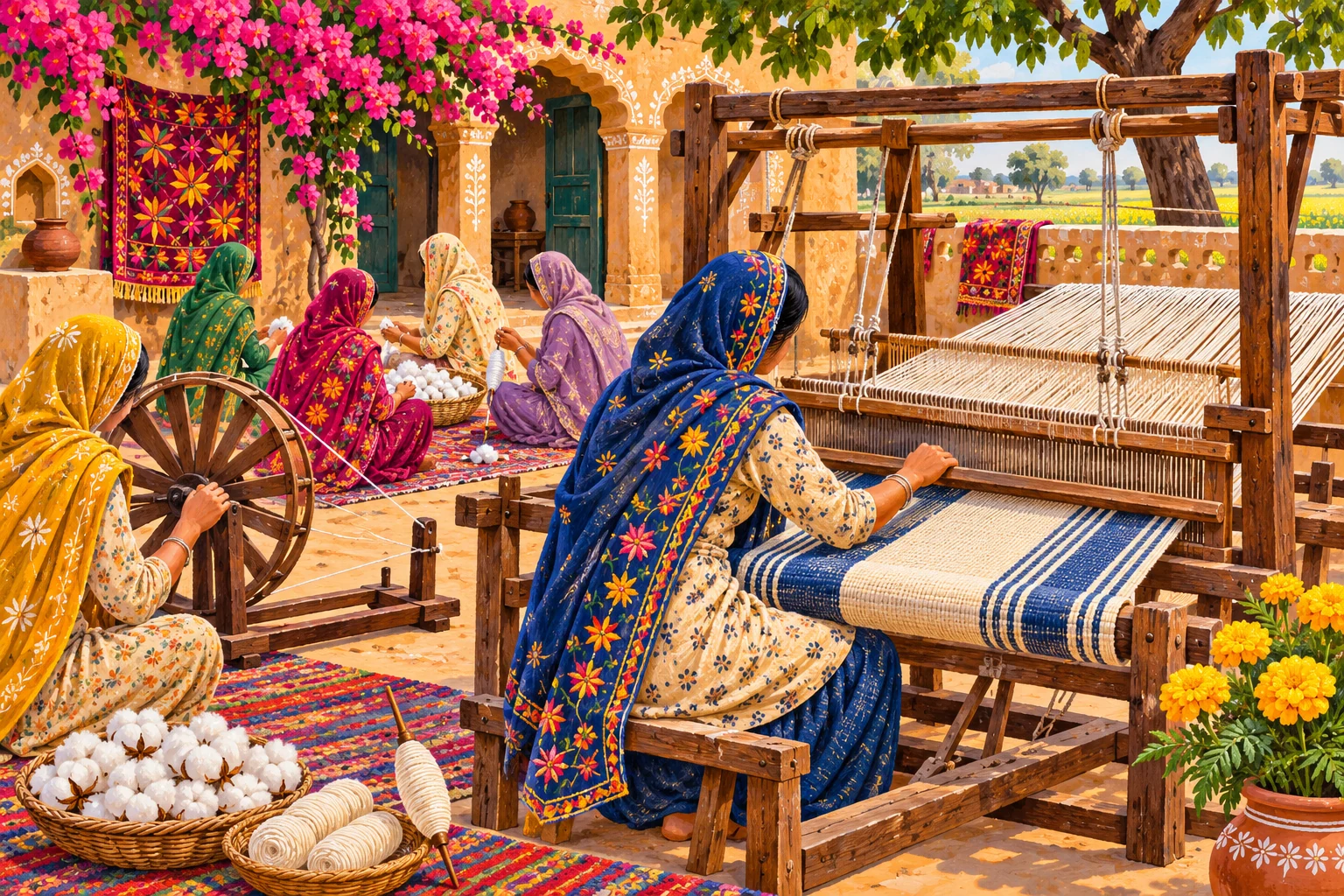
Nav-Trinjan is an initiative of Kheti Virasat Mission that connects cotton growing, spinning and handloom weaving. Its name recalls the Punjabi trinjan, where women gathered to spin, sing and share stories. The official site describes a working relationship between ecological farming, textile practice and rural livelihoods. The cloth carries several kinds of labour: the farmer’s crop, the spinner’s yarn and the weaver’s control of the loom.
Rupsi Garg leads the initiative, while experienced weavers such as Shinder Kaur help pass skills to learners. The Artisan Archive’s named team page identifies Garg with Trinjan and Kaur as a lead educator. In The Tribune’s account, Kaur explains that she learned weaving as a child and continued it after marriage. Her contribution is a reminder that revival depends on people who have carried a craft through years when it received little attention.
The Tribune describes a weaving school established in 2023, where women and younger learners can practise the work. Nav-Trinjan’s own account emphasises indigenous cotton, handloom skills and training women who are the first in their families to weave. Learning a craft involves repeated physical decisions: preparing yarn, keeping tension and finishing a fabric. A school gives those decisions time, tools and someone experienced enough to explain them.
This is a living craft story with practical needs. Cotton must reach the spinner, finished cloth must find buyers, and artisans need payment and space to work. The initiative’s website offers its own account and collections, while the linked interviews add named voices. Participation and income figures from a particular report are not used here as permanent totals. The focus is the documented chain of work and the people who teach it.