Nasir Dhillon te Bhupinder Singh Lovely ne Punjabi Lehar di sanjhi bunyaad rakhi. Eh platform Vand vele vichhre lokan diyan yaadan, pindan de naa te parivaar di bhaal nu lokan tak pahunchaunda ae. Channel da apna maqsad dohan Punjaban vich galbaat te sanjh vadhauna ae.
2022 di reporting Sadiq Khan te Sikka Khan de Kartarpur vich milan da khas waqia dasdi ae. Har bhaal da eho natija hona zaroori nahi. Buzurg di gall likhan vele naa, thaan te ijazat da khayal rakho; purane ank ajj di kamyabi di ginti nahi ne.
Poora khoj lekh — English
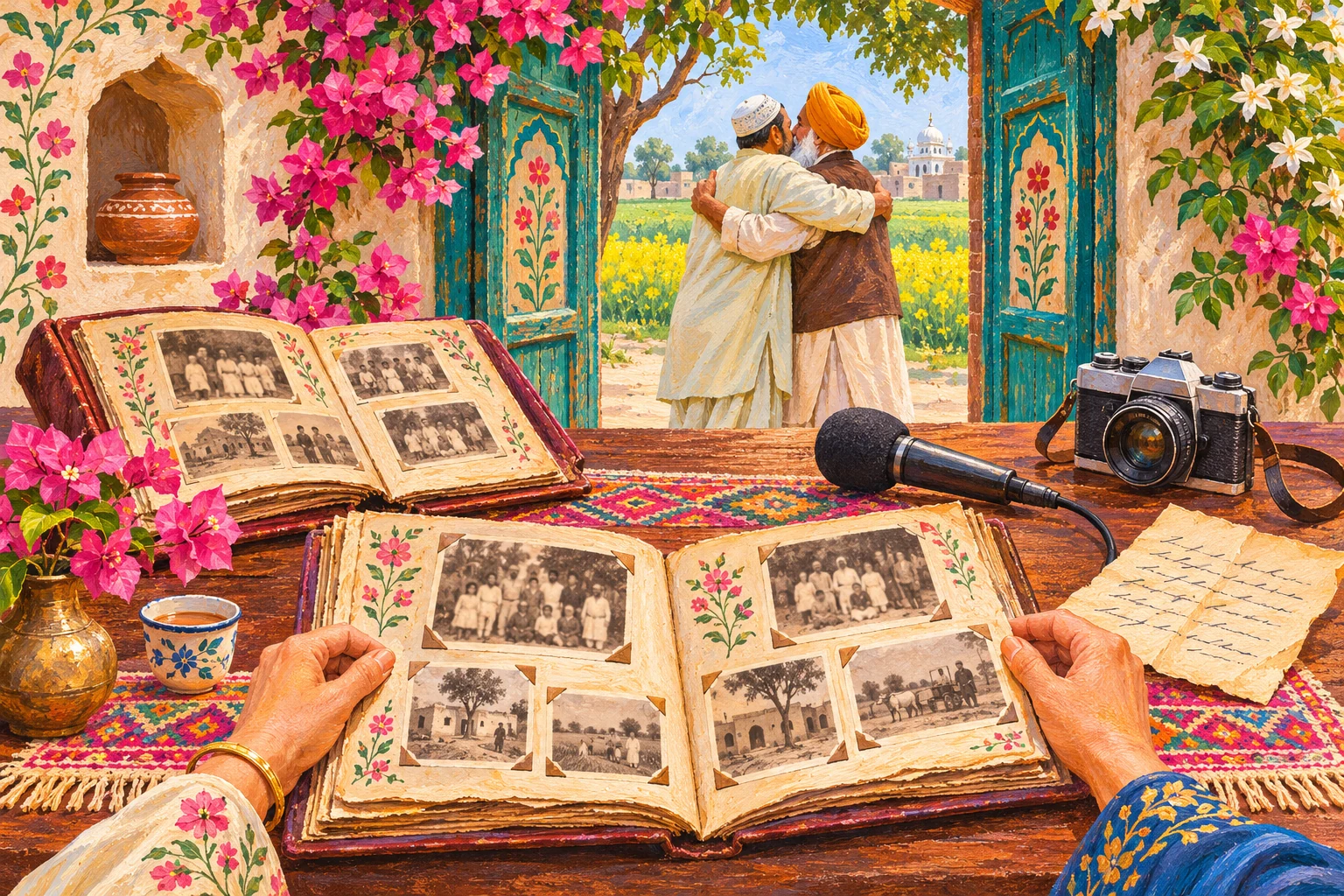
Nasir Dhillon and Bhupinder Singh Lovely co-founded Punjabi Lehar, a platform associated with recording Partition memories and connecting people across the India–Pakistan border. The channel describes its purpose as bridging the distance between East and West Punjab through communication and shared stories. Its subjects include people searching for relatives, childhood friends and places left behind in 1947.
The work gives a practical role to oral history. A person describes a village, a family name or a lost relationship; a published appeal may reach someone who recognises a detail. In an August 2022 account, Dhillon explained that they first noted people’s information and shared it through social media. The network grew through viewers and contacts on both sides of the border. A remembered place-name can therefore become the beginning of a search.
The same reporting describes Sadiq Khan and Sikka Khan, brothers whose reunion at Kartarpur in January 2022 followed an appeal published by Punjabi Lehar. Someone in Sikka’s village recognised the story and helped connect them. This is a documented example of the platform’s work, rather than a promise that every search ends in a meeting. The ability to contact a relative and the ability to travel to them are separate parts of the experience.
For readers, these stories show why everyday speech, old addresses and family photographs deserve careful attention. Recording an elder’s memory can preserve both affection and useful detail. Names and recollections still need checking, and a person should have a say in which parts of their life become public. The sources below retain their original dates; audience numbers and cumulative reunion totals are not presented as current measures of success.