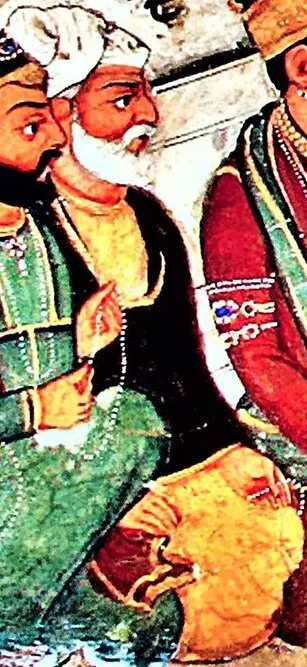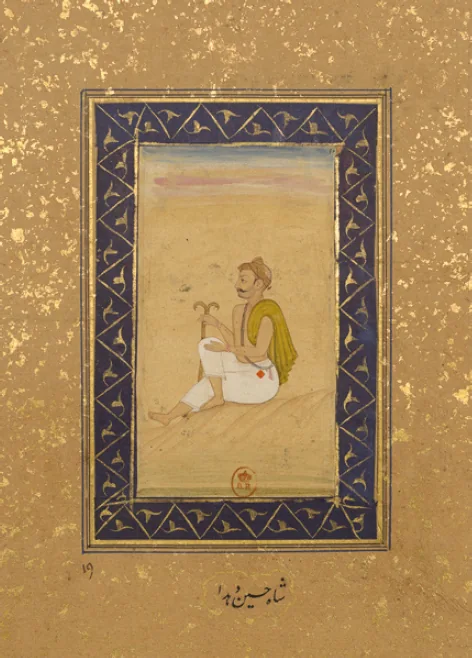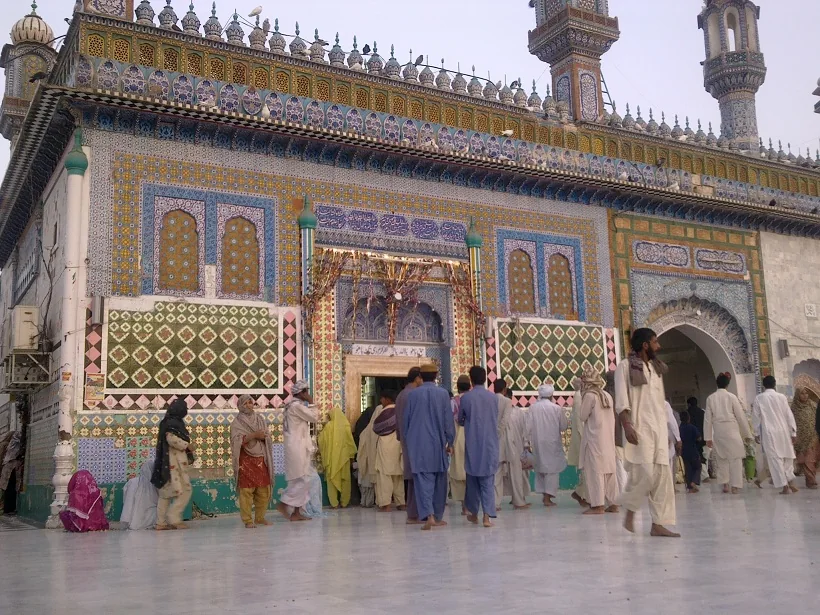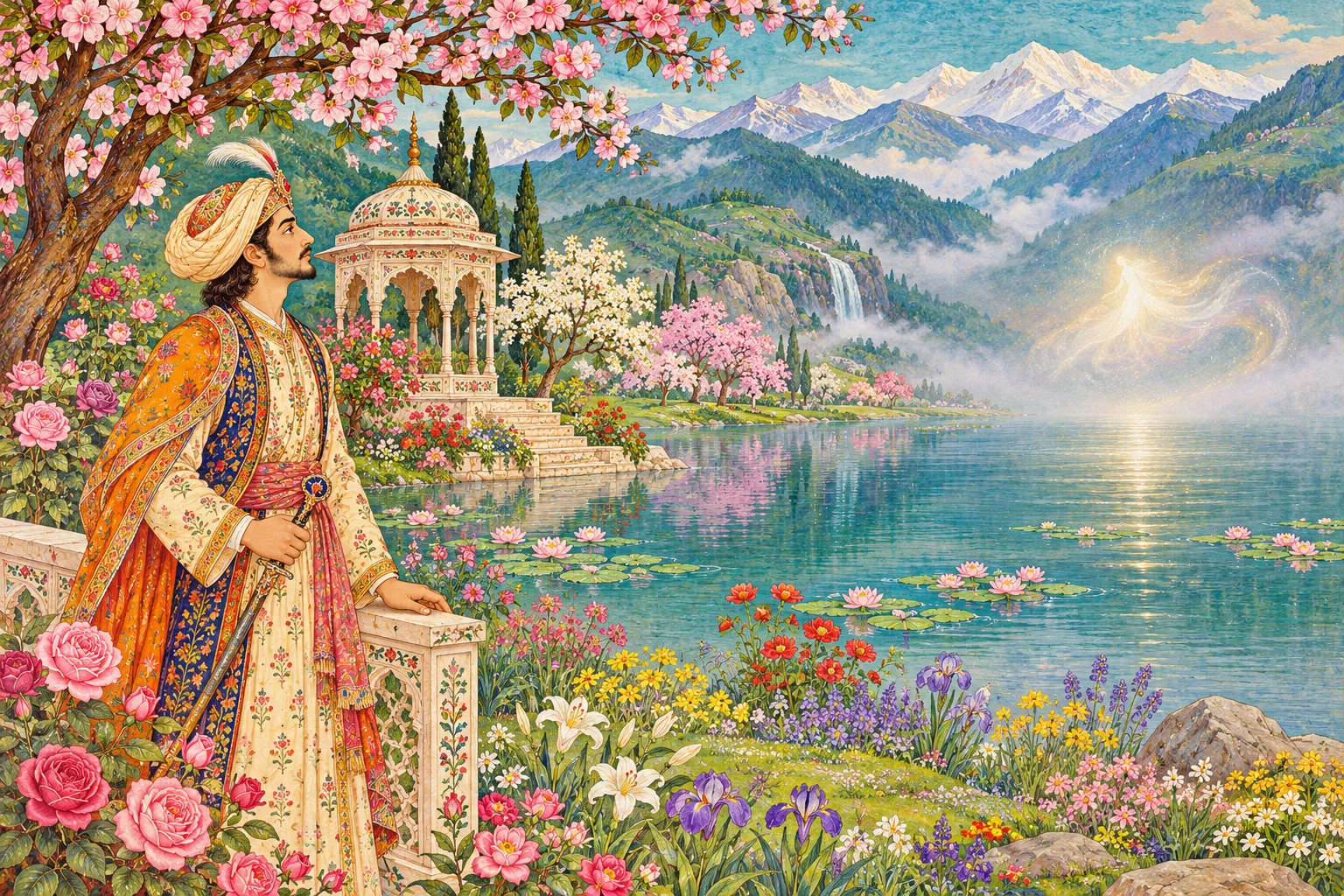
Saif ul Malook Mian Muhammad Bakhsh de Safar-ul-Ishq da mashhoor naa ae. Shehzada Badi ul Jamal di talaash vich safar karda ae; naal hi kahani ishq, roohani talab ate akhlaqi soch wal murdi ae. Is da kalpnik jag safarnama vang tasdeeq karan layi nahi, adab vang parhan layi ae. Likhat mukkan, pehli chhapai ate baad de edition vakh mauke ne. Ikk qisse wala hissa ate us kol aundi narrator di gall ikatthe parho. Puchho naseehat ise thaan kyon aundi ae. Gaaya dohra pehla darwaza ho sakda ae, par poora safar us de maane hor kholhda ae.
Eh Punjabi saar poore lekh wal jaan da pehla raah ae. Tafseeli Angrezi khoj, kitabaan de naa ate hawale hethaan ne. Kalam parhde jaan sunde hoye chhapi edition, tarjuman ate gaun wale nu vakh vakh pachhano; mashhoor hon naal har tuk di nisbat pakki nahi ho jandi.
Poora khoj lekh — English
Saif ul Malook is the widely used title of Mian Muhammad Bakhsh’s Safar-ul-Ishq. Its narrative follows a prince’s search for a fairy princess, Badi ul Jamal, while using the journey to explore spiritual and moral concerns. The University of Illinois teaching exhibit introduces the work through that relationship between story and divine love. Its imagined geography belongs to a literary world; it should not be treated as a record of a journey that can be verified like a travel diary.
The history of the text is more documentable than the adventures of its characters. Researcher and editor Saeed Ahmad dates completion to 1863 and an early Lahore printing to 1869, after a period of preparation. A library catalogue records a reproduction of an edition dated 1286 AH, rendered there as 1869 or 1870. Composition and printing are distinct events, and a modern reprint is another distinct edition.
A study by Usman Anwar and Saima Perveen reads the poem as a vernacular criticism of the misuse of power, connecting its spiritual themes with empathy and social morality. This interpretation opens a route beyond treating the work only as a source of detached wisdom sayings. The story’s movement and the narrator’s reflective pauses can be read together.
Choose a complete edition, noting its editor, script and any translation. Read one narrative section and then the reflection beside it. Ask why that observation appears at this point in the journey: what has the prince, narrator or reader just encountered? A sung excerpt may be the beginning of that inquiry, not its end.
When readers share family memories of the kalam, a village gathering or a recording played at home, the place and occasion explain how the poem entered ordinary life. Credit the performer and avoid reproducing a modern recording or translation without permission. The old narrative remains available for new listeners, but its current interpreters also deserve recognition.