Desi makhi di gall jangli chhatte, phull utte aun wale keere jaan sambhale shehad de karobaar bare ho sakdi ae. Inhan nu ikko gall na samjho. PAU di 2026 training dian misaalan chhatte di mausami sambhaal, bimari, processing ate mandi da vadda hunar dikhaundian ne. Puraane course di report ajj di booking nahi; navi tareekh sidhi puchho. Wild-pollinator habitat layi maqami phullan ate mausam di chon vi chahidi ae. Field diary vich phull, tareekh, thaan ate bina tang kite tasveer rakho. Rang vekh ke species da naa na pakka karo. Jangli colony chukkan di thaan maahir kolon pachhaan ate salah lao.
Eh lekh gall-baat te sikhhan di shuruaat ae. Apne khet layi faisla mitti, paani, mausam, kharche ate maqami maahir di salah naal karo. Tajurbe di thaan, tareekh, fasal ate natije likho; ikk changi misaal nu har zameen layi pakka waada na samjho.
Poora khoj lekh — English
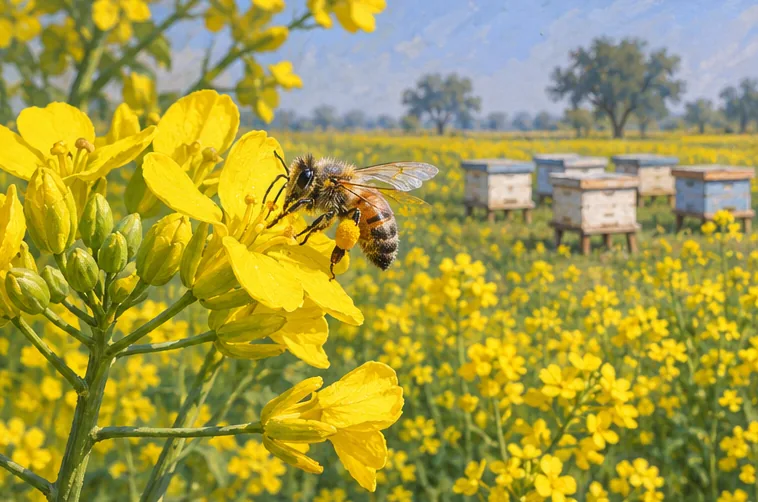
A conversation about ‘desi bees’ can mean a wild colony remembered from a village tree, insects visiting a crop, or a managed honey enterprise. These subjects overlap, but the learning is different. A photograph of a hive does not identify every pollinator in a field, and a plan to sell honey involves practical responsibilities beyond planting flowers.
PAU’s KVK Gurdaspur reported a beekeeping course held from 9 to 13 March 2026. Its account describes seasonal hive management, pest and disease issues, migratory beekeeping, honey processing and marketing discussions. A later KVK Faridkot programme, held from 23 to 30 October 2026, focused on beekeeping, processing and marketing with practical learning. These are completed training examples, not notices of places currently available on a course.
The useful lesson is the range of skills involved. Before investing, ask a local specialist about the bee species, seasonal forage, colony health, equipment, safe handling and the market for the intended product. Request current training dates directly from the institution. Do not turn a successful trainee’s experience into a promised income for another household.
Wild-pollinator habitat deserves its own record. ICAR’s Directorate of Floricultural Research describes a Pollinator Habitat Restoration Kit using selected flowering annuals to support insect visitors in agricultural settings. Its programme comes from research in another location; a Punjabi planting scheme still needs species and seasonal choices suited to its own site. Habitat work is not simply the purchase of more hives.
For a shared field diary, record the flowering plant, date, approximate location and a clear photograph taken without disturbing a nest. Ask for identification rather than guessing from colour. Note crop-protection practices and discuss risks with an extension specialist. Keep a wild colony in place unless a qualified professional determines otherwise. A useful community series can connect growers, beekeepers and insect researchers while preserving the difference between observing biodiversity and moving living colonies.