Punjab de rukh vaddian janglan tak seemat nahi. Nehran, sarkan ate railway de naal laggian qataraan vi dharti da hissa ne. Forest Department shisham, kikar, siris ate semal varge naa dasda ae; par har khaali kandha laun layi tayyar thaan nahi. Paani de raah, aawa-jai, pakke rukh da phailao ate zameen di ijazat samjho. Cholistan di desert list geeli nehar jaan bhare vehre di list nahi ban sakdi. Nursery kolon sahi pachhaan ate paude da sarot puchho. Laun di tareekh, paani, rakhwala, jeeunde rukh ate nuksan vakh gino. Laun wale din di tasveer ton aggli dekhbhaal di kahani hor zaroori ae.
Eh lekh gall-baat te sikhhan di shuruaat ae. Apne khet layi faisla mitti, paani, mausam, kharche ate maqami maahir di salah naal karo. Tajurbe di thaan, tareekh, fasal ate natije likho; ikk changi misaal nu har zameen layi pakka waada na samjho.
Poora khoj lekh — English
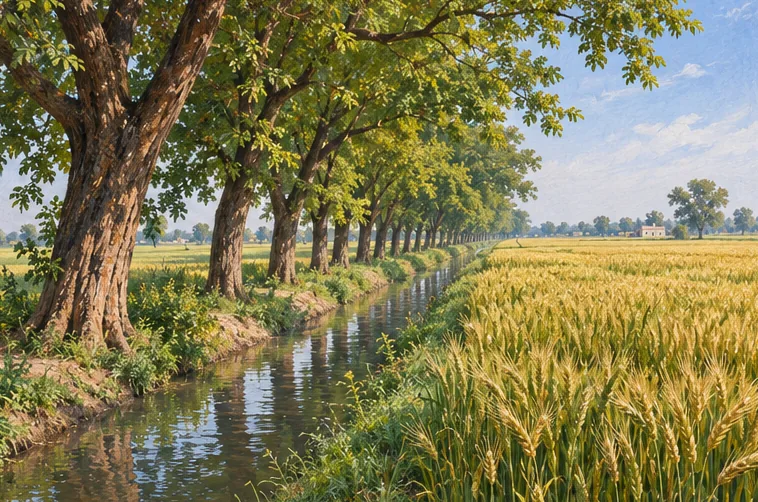
Punjab’s green landscape is not limited to large forest blocks. The provincial Forest Department describes linear plantations along roads, canals and railway routes, with species including shisham, kikar, siris and semal, as well as introduced species. These long strips sit beside working infrastructure. Their management must therefore consider transport, water access, neighbouring farms and the mature size of trees, rather than treating every open edge as an empty planting site.
A separate government project for 2025–26 to 2027–28 describes afforestation along canals and railways with native-species plantations, biodiversity and soil-erosion reduction among its aims. These are programme objectives, not evidence that every promised outcome has already been achieved. The President’s August 2026 plantation message also called for suitable indigenous species and continued protection and nurturing. This offers a useful test for any campaign: what happens after the photograph of planting day?
Landscape matters. IUB’s documented Cholistan seed work concerns indigenous desert vegetation. That does not turn its species list into a planting prescription for a wet canal bank, a crowded street or a waterlogged field. ‘Native to Punjab’ is a starting question; the local habitat and the source of the planting material still matter.
Before a village adopts a site, record who controls the land and who can authorise planting. Discuss overhead lines, paths, irrigation structures, buildings and the space a mature canopy and root system will require with the relevant authority or a trained professional. Identify the species properly, ask the nursery about provenance and health, and name the person or group responsible for aftercare.
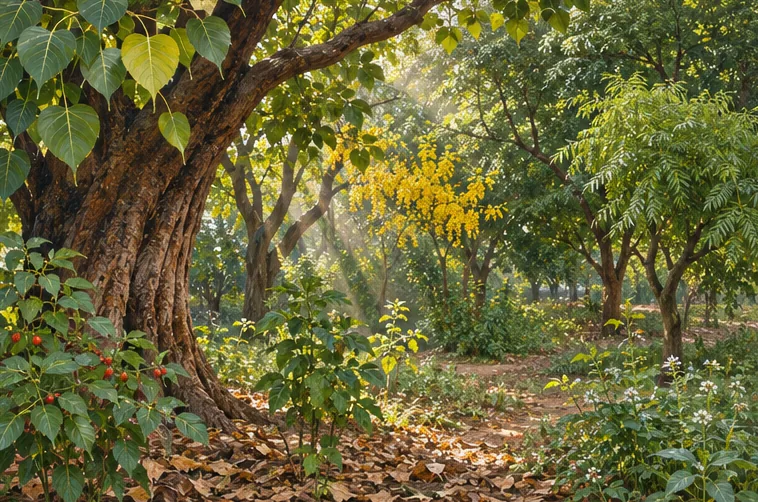
A public tree diary can make responsibility visible. Record the planting date, watering arrangements, protection from damage and a set of later visits. Count living trees, losses and replacements separately; record the reasons for failure when known. Include an old tree’s story too, with the landholder’s permission. Restoration is more convincing when it can show the ordinary, continuing work that keeps a tree alive—not only the number of saplings distributed.