Beej bank purani variety bachaa sakda, sikhan da kendar ban sakda jaan harh magron bijai da sahara ho sakda ae. Har maqsad di miktar ate vand de asool vakh honge. FAO da guide lokan di committee ate collection, safai, storage, record ate nava beej uggaun di zimmedari vandan nu ahmiyat dinda ae. Har batch nu code deo; naa, sarot, fasal da saal, miktar, thaan ate parkh da record naal rakho. Sukkauna, nami ate bimari bare crop-specific maahir kolon sikho. Har paude da material aam sukke beej vang nahi sambhalia janda. Chhote par nibh sakkan wale paddar ton shuru karo ate ghaate vi sachai naal likho.
Eh lekh gall-baat te sikhhan di shuruaat ae. Apne khet layi faisla mitti, paani, mausam, kharche ate maqami maahir di salah naal karo. Tajurbe di thaan, tareekh, fasal ate natije likho; ikk changi misaal nu har zameen layi pakka waada na samjho.
Poora khoj lekh — English
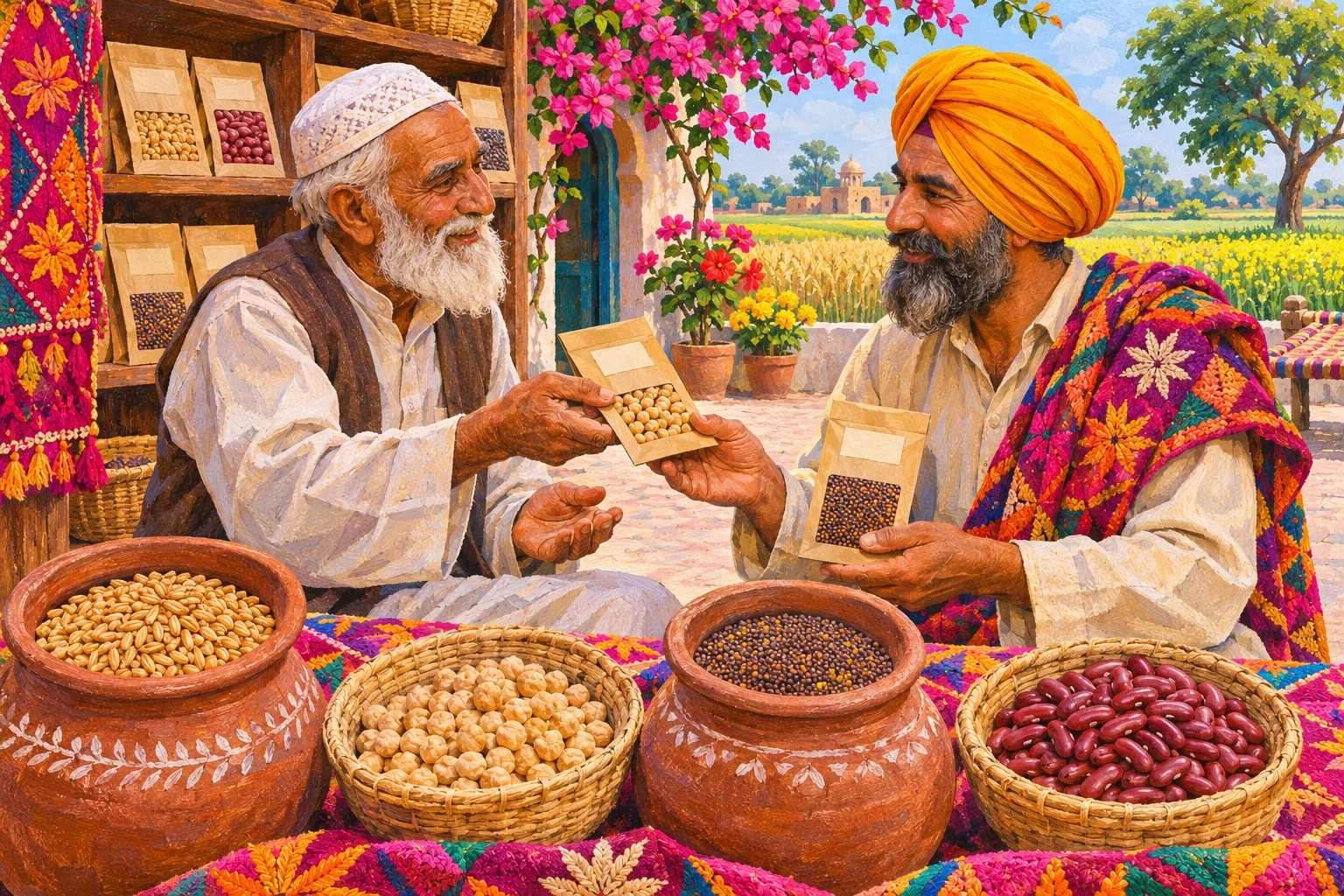
A seed bank can serve several purposes: reliable planting material after a flood, conservation of an older variety, a learning collection, or seed for regular cultivation. The FAO’s community-seed-bank guide begins with this choice and with agreement among the people who will use it. A bank established for disaster recovery will need different quantities and rules from a small heritage collection. Decide the purpose before asking families to hand over their seed.
The same guide recommends a management committee and a clear division of work: collection, selection, cleaning, storage, record keeping and renewal of the collection. It also asks communities to decide who may receive seed in an emergency, how much they may receive and when stocks must be regenerated. These decisions belong in a short, understandable agreement. A trusted custodian is valuable; a shared record prevents the whole project depending on one person’s memory.
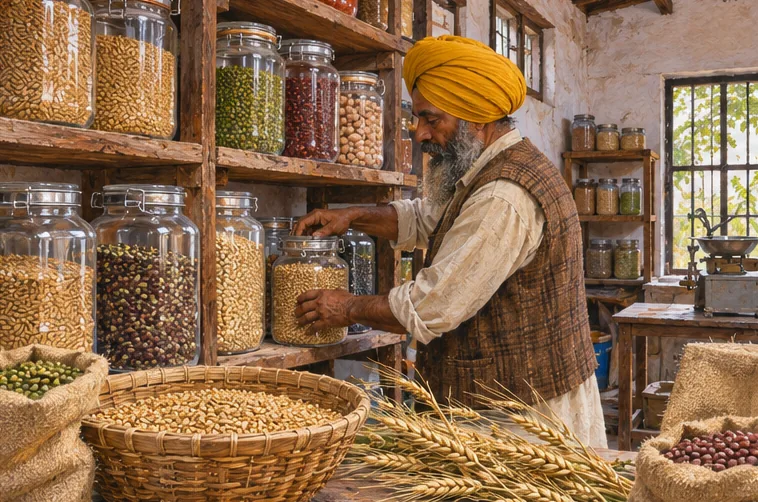
Seed quality changes during handling and storage. The Alliance of Bioversity International and CIAT’s ‘Make them dry, keep them dry’ training brief discusses traditional containers alongside airtight storage, desiccants and humidity measurement. Its genebank manual places cleaning, moisture assessment, quality testing, packaging, monitoring and regeneration in one continuous process. Equipment is only part of that process: a container cannot correct an unidentified or poorly handled sample.
For a small collection, give every batch a unique code. Keep its identity, origin, harvest date, amount, storage location and testing history together. Record every withdrawal and the amount left. Put an understandable label on the container and keep a second copy of the record elsewhere. This is a practical recording template, not a substitute for crop-specific technical training.
Arrange an initial session with a seed specialist about maturity, drying, seed-borne disease and germination testing for the crops you intend to keep. Some plant material needs methods different from ordinary dry-seed storage. Begin at a scale the group can maintain, review losses honestly, and expand only when the work and responsibility are sustainable. A living seed bank is renewed through care, use and learning.