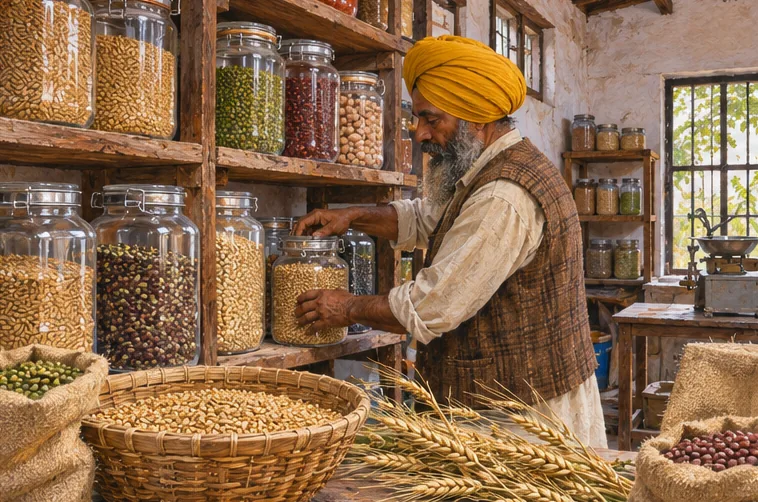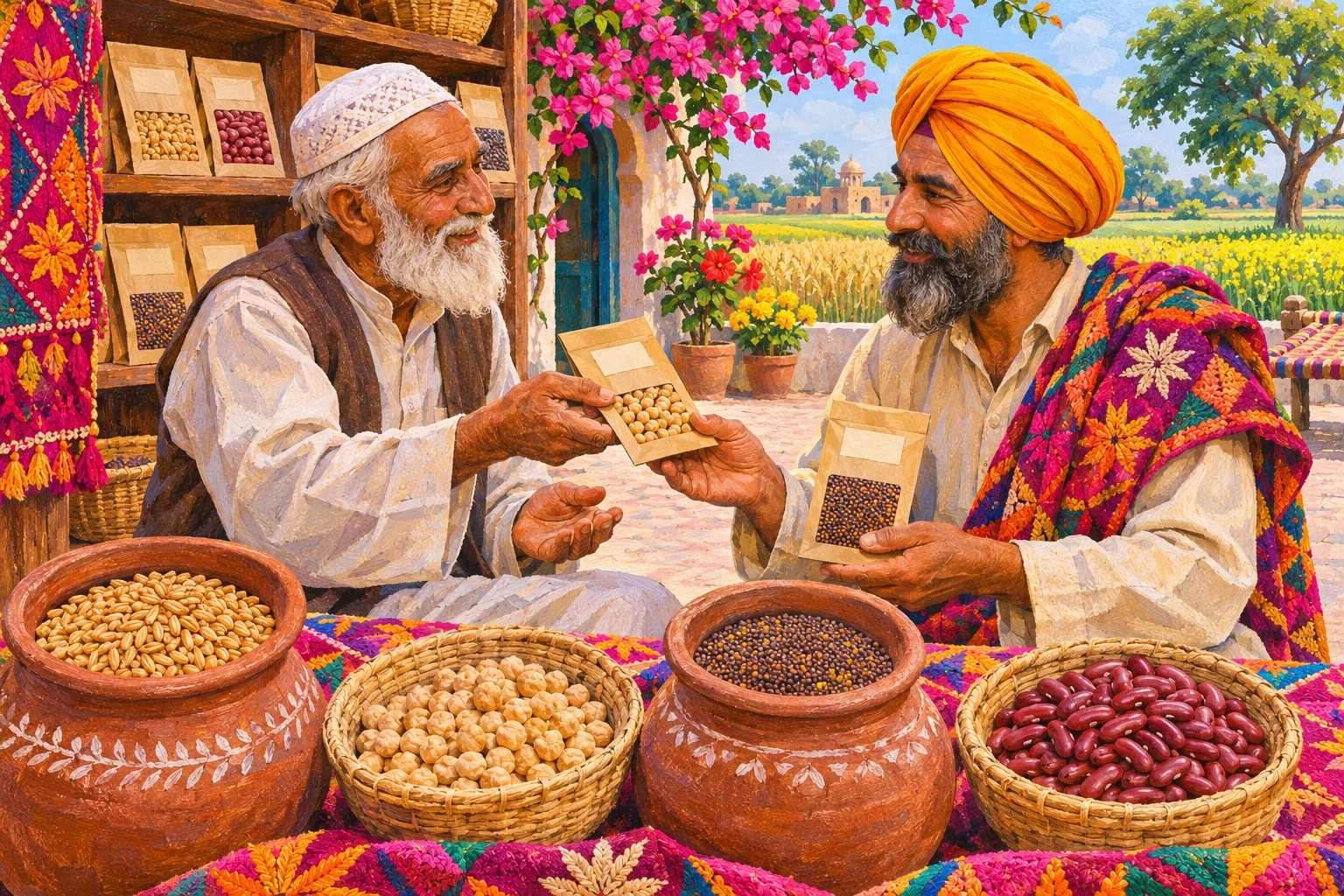
Muthi bhar beej de naal dadi di yaad, pind da naa ate khaane da dhang aa sakda ae. Sanjha Beej ithe saadi sanjhi beej-jaankari da vishaa ae, kise ise naa di sanstha naal saanjh da daava nahi. Kheti Virasat Mission ate Pakistan de Plant Genetic Resources Program de darj kam ton sikhia ja sakda ae. Fasal, maqami naa, zila, saal, asal sarot, paani, pakkhan da samaa ate ugghan di parkh likho. Desi lafaz ikalla variety di pachhaan nahi. Landrace, open-pollinated, hybrid jaan anpachhate beej nu vakh darj karo. Jaankari sanjhi karna mulkan paar beej bhejan di ijazat nahi ban janda.
Eh lekh gall-baat te sikhhan di shuruaat ae. Apne khet layi faisla mitti, paani, mausam, kharche ate maqami maahir di salah naal karo. Tajurbe di thaan, tareekh, fasal ate natije likho; ikk changi misaal nu har zameen layi pakka waada na samjho.
Poora khoj lekh — English
A handful of seed can arrive with a village name, a grandmother’s memory, a preferred cooking method and a claim that it once grew without irrigation. Those details are valuable, but they describe different kinds of knowledge. A family story identifies a relationship; a crop record describes a particular season. Keeping both makes seed heritage more useful than a packet labelled only ‘desi’. Here, Sanjha Beej is our shared-seed knowledge theme, not a claimed partnership with an organisation of that name.
There are documented institutions to learn from. Kheti Virasat Mission describes locating traditional varieties and knowledge keepers in Indian Punjab. Pakistan’s national Plant Genetic Resources Program combines seed preservation, germination monitoring and evaluation with a database of passport, stock and performance information. The Crop Trust’s profile explains how its collections support researchers and crop improvement. A community keeper and a national genebank do different work, but both depend on knowing what a sample is.
Start a record with the crop, local name, any verified variety name, grower’s chosen name, district, harvest year and source of the original seed. Add what was actually observed: soil, water source, sowing season, flowering, maturity, taste, storage and a dated germination result. Keep uncertainty visible. ‘My family has grown it for decades’ is a meaningful testimony; ‘this is Punjab’s oldest variety’ needs different evidence.
The next grower needs to know whether the material is a landrace, a named open-pollinated cultivar, a hybrid or unidentified. Photographs of a plant and its fruit can help a specialist, but an attractive image is not a genetic identification. Ask before publishing someone’s contact details, and credit the person who supplied the knowledge.
Share observations and lawful local contacts first. A digital story does not grant permission to move living material between countries. Keep the cultural connection open while checking plant-health, seed, trade and access requirements separately. The strongest shared collection is one that another family can understand, question and improve.