Bagh di shuruaat fashion wale phal ton nahi, apni zameen ton karo. PAU de agroclimatic zone vakh phalan di rahnumai dinde ne; zille de andar vi Kandi ate Bet varge ilaqe farak rakhde ne. Sargodha di Citrus Research Institute variety, ilaqa ate pakkhan da samaa jorh ke dasdi ae. Potohar de conservation naal jurre bagh site-specific tajurbe ne. Nursery jaan ton pehlan mitti, paani, nikaas, sardee-garmee, cultivar ate rootstock bare maahir naal gall karo. Pakke rukh di jagah, mehnat, harvest sambhaal ate mandi da plan vi banao. Regional list kise ikk khet di paidawaar jaan munafe da pakka waada nahi.
Eh lekh gall-baat te sikhhan di shuruaat ae. Apne khet layi faisla mitti, paani, mausam, kharche ate maqami maahir di salah naal karo. Tajurbe di thaan, tareekh, fasal ate natije likho; ikk changi misaal nu har zameen layi pakka waada na samjho.
Poora khoj lekh — English
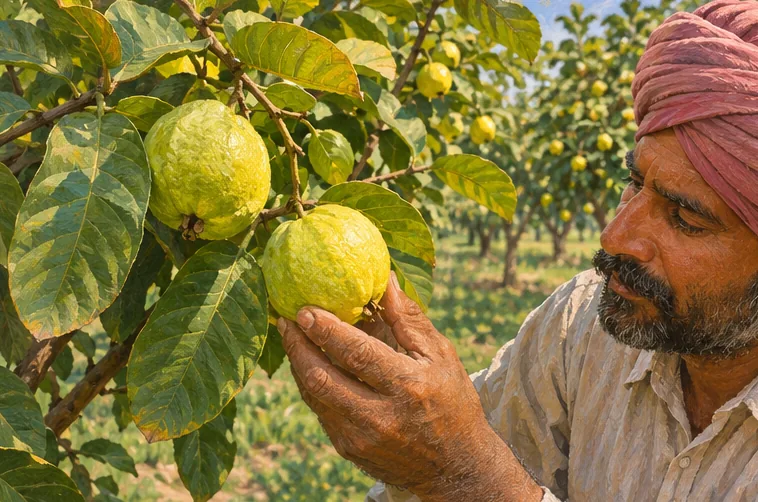
An orchard begins with a particular piece of land, not a fashionable fruit. PAU’s fruit package separates Indian Punjab into agroclimatic zones. Its submontane list includes mango, litchi, kinnow and other mandarins, pear, guava, peach and plum among its main fruits. The central zone gives prominence to pear, guava, peach and plum, while the arid-irrigated zone includes mandarins, sweet orange, guava, grape and ber. These are broad regional guides, not a guarantee for an individual plot.
The guide’s special-area categories are a reminder that even a district name can hide important variation. Kandi and Bet areas have their own considerations. Before buying nursery stock, take the exact location, soil and water information to a local horticultural adviser, and ask which cultivar and rootstock the recommendation assumes. A fruit’s common name alone is not a complete planting specification.
In Pakistan Punjab, the Citrus Research Institute at Sargodha publishes variety-specific recommended areas and maturity periods. For example, its CRI Mitha and CRI Nimbu entries refer to a range of irrigated districts, including Sargodha, Faisalabad, Sahiwal and others. This is more informative than saying ‘citrus grows in Punjab’: the selection also concerns the variety, irrigation setting and harvest window.
Potohar poses another set of questions. SAWCRI describes work on eroded or gullied land using fruit planting with soil-and-water conservation measures. Its examples at Damal in Attock and Hafial in Jhelum involve different fruit combinations and different irrigation sources. These are site-specific research accounts, not instructions to reproduce the same planting on every rain-fed hillside.
Build the decision in stages: confirm soil and irrigation-water suitability; assess drainage and exposure; choose verified planting material; then examine mature space, labour, crop protection, harvest handling and access to buyers. Ask when meaningful production is expected and what happens during the years before it. Local trials and official variety guidance are starting evidence. The eventual orchard plan should fit the landholder’s field, resources and market, rather than a universal yield or profit promise.