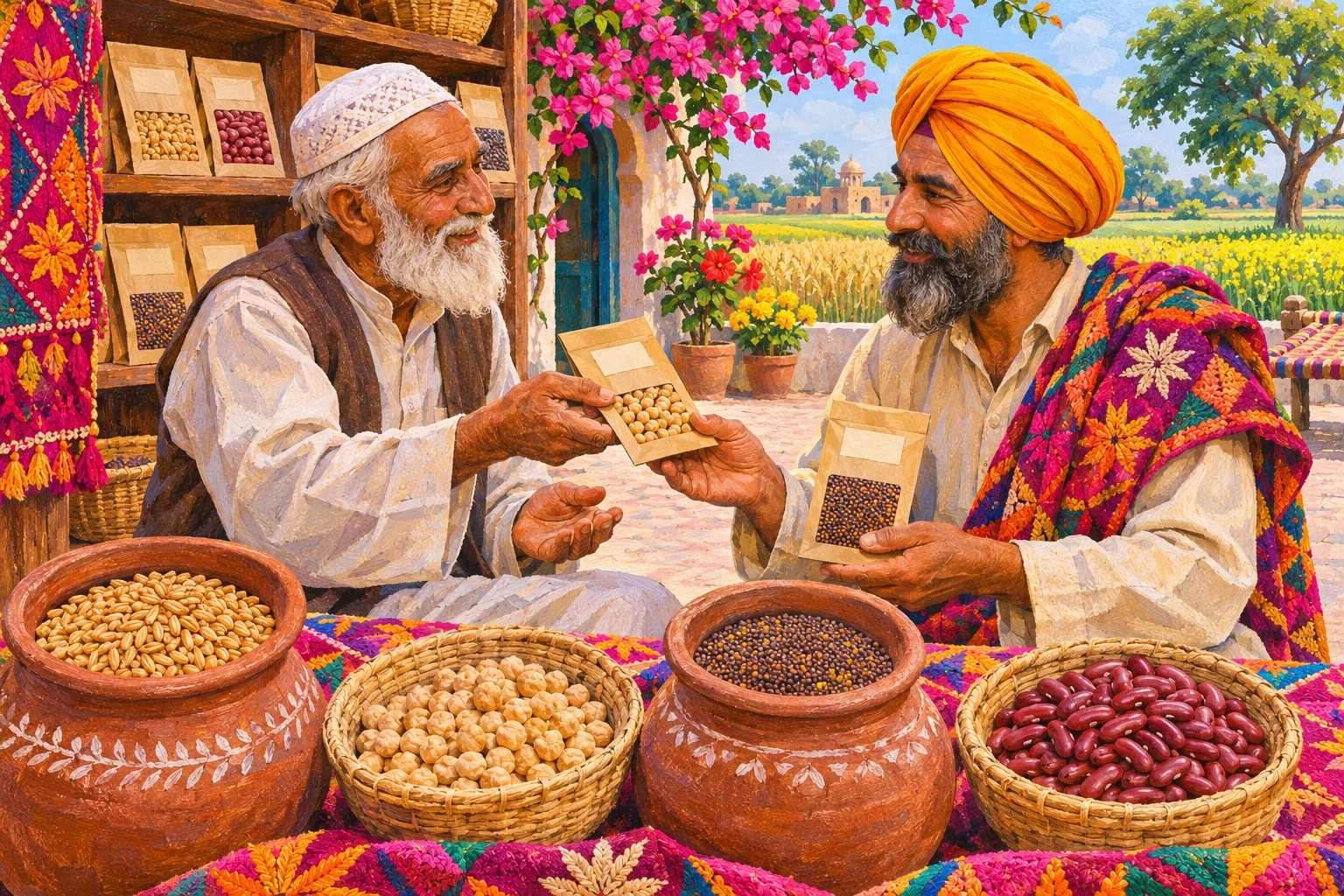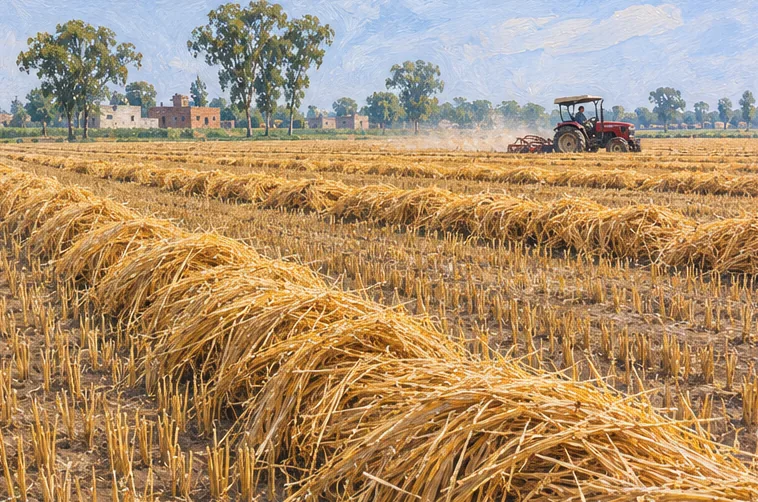
Jhona vaddan ate agli fasal beejan vich samaa thorra ho sakda ae. Is layi parali di gall sirf kise ikk machine da naa nahi. Combine parali kiven chhaddda ae, machine kadon milegi, aggli bijai kadon hovegi ate kharcha kaun karega, sabh sawaal jorho. ICAR ate PAU de 2025 programme Super SMS, Smart Seeder ate Happy Seeder diyan field misaalan dinde ne. Demo har khet di suitability da saboot nahi. Hire service, fuel, mehnat, deri ate bijai da natija darj karo. Pind di sanjhi scheduling chhote kisaan nu vi vele te seva de sakdi ae. Natija poore kam de silsile naal samjho.
Eh lekh gall-baat te sikhhan di shuruaat ae. Apne khet layi faisla mitti, paani, mausam, kharche ate maqami maahir di salah naal karo. Tajurbe di thaan, tareekh, fasal ate natije likho; ikk changi misaal nu har zameen layi pakka waada na samjho.
Poora khoj lekh — English
The interval between harvesting rice and establishing the next crop can be short. A useful conversation about paddy straw therefore starts with the actual sequence of work: how the combine leaves the residue, what machinery can reach the field, when the next crop must be sown and who pays for each operation. Telling growers simply to change a practice leaves these decisions unanswered.
At Nurpur Bet, Ludhiana, on 14 October 2025, ICAR and PAU-KVK Samrala organised a residue-management demonstration. The institutional report describes in-situ paddy-straw management and demonstrations of the Super Straw Management System, Smart Seeder and Happy Seeder. The technologies were presented alongside discussion of trials, economics and regional adaptation. The event documents an extension activity; it does not prove that every machine will be equally suitable or available at every farm.
A separate ICAR travelling seminar launched on 24 October 2025 brought farmers, researchers and extension staff into a sequence of field visits. Its account describes a Happy Seeder demonstration for wheat sowing into standing paddy stubble and discussion of custom hiring, mechanisation efficiency and crop diversification. These details show why access to a service can matter as much as ownership of a machine.
For a local comparison, record the harvesting system, residue condition, operation dates, machinery used, fuel, labour, hire charges and sowing result. Include delays and unsuccessful attempts. Ask an operator or extension specialist what the chosen machine needs from the preceding harvest and what adjustments are required for the field. A quote for a hire service should be checked for what it includes, rather than compared only by a headline price.
A village story can follow cooperation too: how a group schedules scarce machinery, shares experience and prevents a small grower being last in the queue. Crop residues also belong in wider discussions of biomass use and soil management, but each route has its own logistics and standards. The most useful account explains an entire working system and its limits, with a place, a season and people willing to describe what really happened.