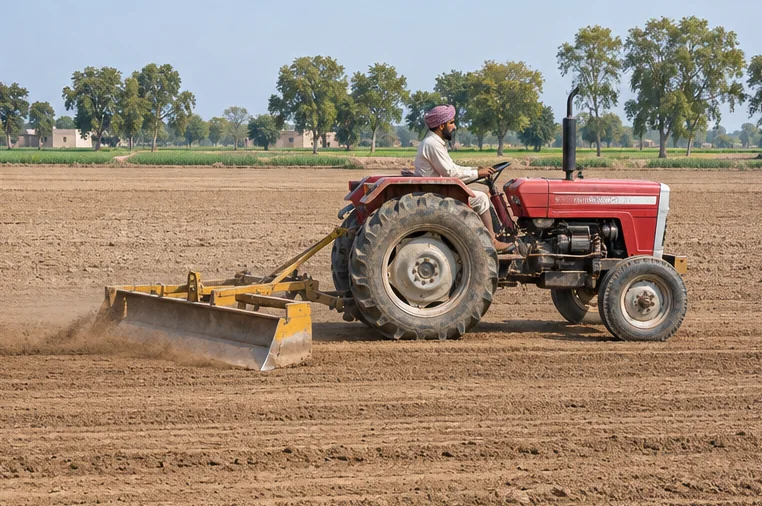
Pakistan Punjab de 2025–28 programme vich watercourse, laser levelling ate training de maqsad darj ne. Drip ate sprinkler bare vi OFWM jaankari dinda ae. Indian Punjab di rahnumai chhoti muddat wale munasib jhone, direct seeding ate alternate wetting-drying nu shartan naal jorhdi ae. Eh kise vi khet layi ikko nuskha nahi. Chhote demo plot nu aam plot naal ikko season vich vekho. Area, irrigation da samaa jaan naapi miktar, baarish, pump da kharcha ate harvest darj karo. Kithon paani bachia ate ki naapeya, eh saaf hove. Kisaan di yaad keemti ae, par measured result de naa naal sirf measured record hi deo.
Eh lekh gall-baat te sikhhan di shuruaat ae. Apne khet layi faisla mitti, paani, mausam, kharche ate maqami maahir di salah naal karo. Tajurbe di thaan, tareekh, fasal ate natije likho; ikk changi misaal nu har zameen layi pakka waada na samjho.
Poora khoj lekh — English
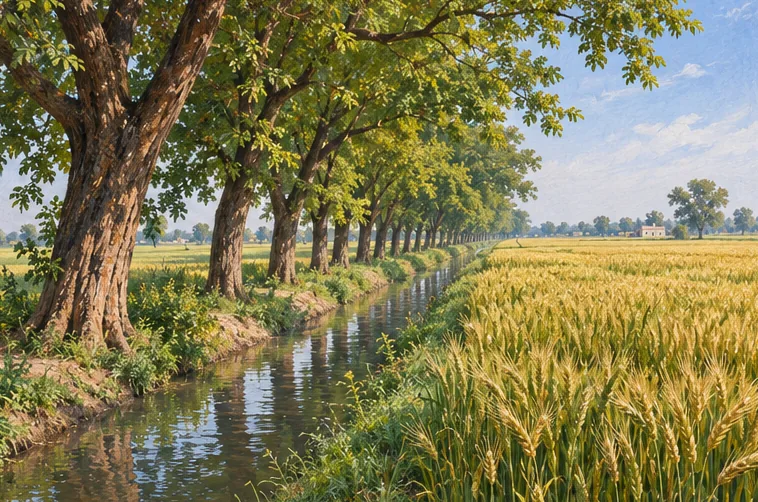
Pakistan Punjab's 2025-26 to 2027-28 Water Efficient Agriculture programme plans watercourse improvement, laser land levelling and training, with more equitable head-to-tail water distribution among its objectives. OFWM also describes drip and sprinkler irrigation services.
In Indian Punjab, PAU recommends locally suitable short-duration rice varieties, direct seeding and alternate wetting and drying. These methods require the right conditions and management; direct-seeded rice is not a universal prescription.
Compare a small demonstration plot with an ordinary plot: note area, irrigation duration or measured volume, rainfall, pumping cost and harvest. A field notebook should show what was measured and the season; savings vary across sites.